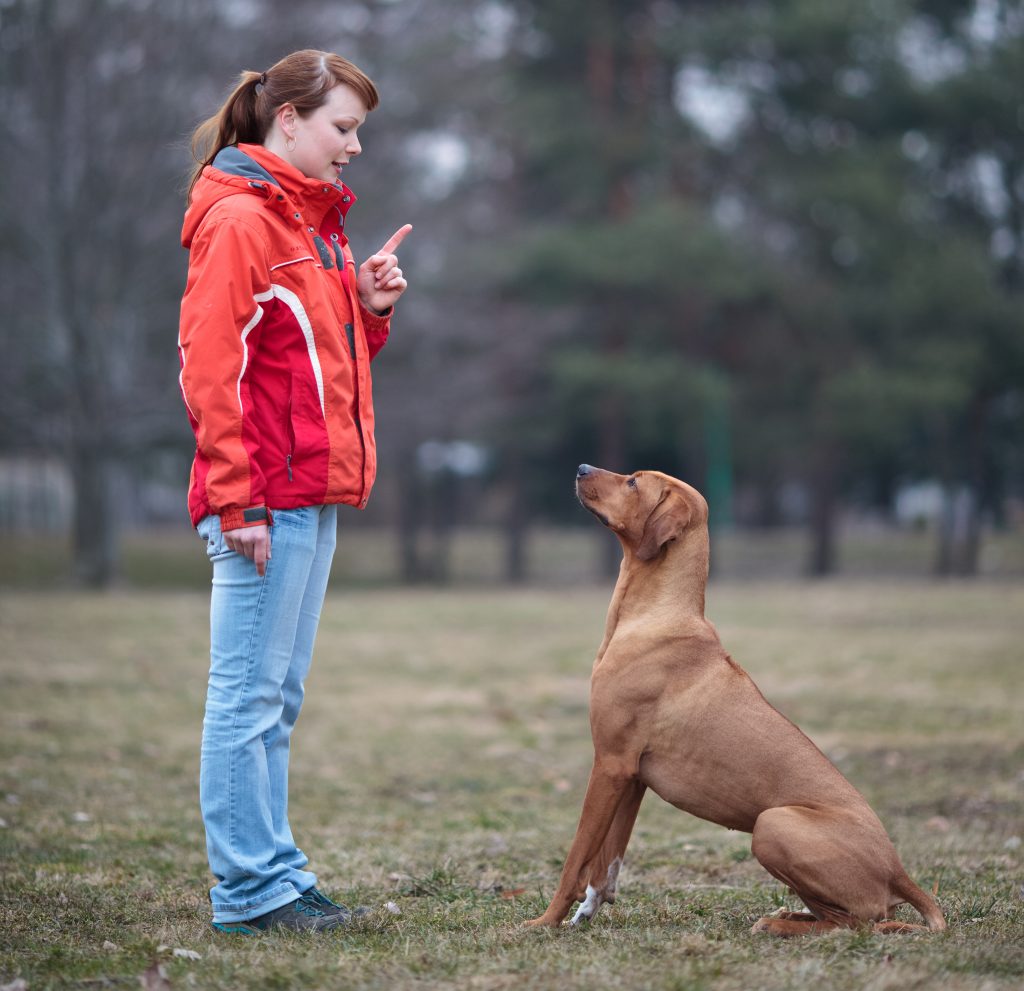
Rhodesian Ridgebacks are not the easiest of the dog breeds to train. This should not, however, put you off them as they are very trainable and well worth the effort you willneed to put in!
Rhodesian Ridgebacks are highly intelligent and learn quickly making them ideal candidates for training. However, they are also stubborn, independent, and very much have a mind of their own. This means they can be difficult to train and need very strong guidance and ownership. Training is vital for a Rhodesian Ridgeback but it has to be done in the right way.
Learn more about their intelligence here.
Why do you need to train them?
Rhodesian Ridgebacks need training for much the same reasons as any dog or dog breed needs training; to get the desired behaviour from them and eliminate the undesirable. Some of the common undesirable behaviours are considered social behaviours and can look like;
- Urinating and defecating in unwanted places around the house,
- Ripped up flooring,
- Chewed up shoes, rugs, carpets, and even dog beds despite having toys of their own,
- Incessant barking and whining,
- Digging,
- Running away when allowed off the leash,
- Nipping at the feet and ankles of all the family,
- Stealing food,
- Showing signs of aggression, etc.
These can potentially ruin your relationship with your dog, and definitely need correcting. They are not, however, the biggest reason for training your dog. There are many that will benefit both you and your pet. Here are the top ten:
- Strengthens the bond between owner and dog.
- Helps communication skills grow between owner and dog.
- Is fun for both the dog and the family.
- Decreases/eliminates behavioural issues.
- Provides enrichment and stimulates your dog’s brain.
- Gives your dog a job.
- Lessens the likelihood of your dog being surrendered to a shelter by you.
- Builds confidence in shy and fearful dogs.
- Creates less work for you in the long run.
- Enhances safety and could even save your dog’s life.
Types of Training
Assisted obedience beginner classes
Beginner training classes are the most popular option when it comes to dog training. They can be found all over the place and comprise of groups of people and their puppies all learning together. A professional trainer will usually teach the classes which are ideal for also socializing your dog.
Assisted private training
This is a one on one class which provides a more concentrated learning experience. This is a good option if your Rhodesian Ridgeback is struggling with any areas of training as they can be concentrated on. These sessions, however, do lack in the area of socialisation which is an incredibly important part of training.
Non-Assisted training
This involves you training your Rhodesian Ridgeback yourself. Due to their stubbornness and independent nature, however, this can be difficult. You will need to research basic training through guides and other resources. Going it alone can also mean your puppy lacks in socialisation, but on the plus side, you can concentrate on areas your puppy needs the most training.
Non-assisted training is basically going it alone and training your Rhodesian Ridgeback yourself. Due to their stubbornness and independent nature, however, this can be difficult. You will need to research basic training through guides and other resources. Going it alone can also mean your puppy lacks in socialization, but on the plus side, you can concentrate on areas your puppy needs the most training.
For those who choose to train their Rhodesian Ridgeback puppies themselves, here are eight tips to success.
- Social skills are the the first area to teach and will include sit, leave, come, leash walking, their name.
- Verbal and physical commands should go together.
- Keep your instruction simple, firm, and succinct. Be patient when it comes to training, new skills will not be learned in an instant.
- Be positive by showing excitement and petting them when they demonstrate good behaviour. They are far more amenable to encouragement that is positive when it comes to achieving a training goal.
- Keep the treats smalls, basically, a nibble that will tell your Rhodesian Ridgeback that they have done well but not keep them chewing for ages.
- Learning should be an incremental procedure, each new command building upon another. Repetition of new skills learned will be essential.
- Keep training sessions to around five to ten minutes several times a day.
- Begin basic training in an environment where there are no distractions.
A little warning on the reward! Too many treats can result in your Rhodesian Ridgeback becoming overweight. Wean them off treats as you develop their training, replacing them with more praise. If you know your Rhodesian Ridgeback has had more treats than they really should in a session, you can also balance this calorie intake out by feeding them a little less at meal times. Be careful, however, as puppies need a certain amount of nutrition per day to ensure they grow healthy and fit.
What’s next?
Many people opt to just stop training their Rhodesian Ridgeback once basic training is complete. Others choose to move on to advanced training such as teaching them tricks. Either is fine though advanced training is the better idea as it stimulates your Rhodesian Ridgeback further and will keep them from becoming bored.
Advanced tricks
Advanced training is the time to have a little more fun with your Rhodesian Ridgebacks training. It is when you would teach them tricks such as roll over, play dead, commando crawling, and many other things. Guides on how to train your Rhodesian Ridgeback to do these things are widely available online and through other resources such as training books and at advanced classes.
Agility
Agility training is fun, engaging, highly addictive, and will keep both you and your Rhodesian Ridgeback in tip top condition. It will also appeal to your Rhodesian Ridgebacks natural instincts to run, chase, and hunt. Despite many people’s preconceptions it is not that expensive to participate in and building a home course is altogether inexpensive.
You will also find a good range of agility classes if you want to get assistance in this kind of training. They will range from beginner to expert so be careful to choose a class at your Rhodesian Ridgebacks level. Competitions are also widespread in agility training should your beloved pooch become good enough to step up their game into competing. Learn more about agility here.
Obedience
Trained club Instructors will teach you to train your dog. Learn more about obedience here.
ANKC “Rules for the conduct of Obedience Trials”
Lure Coursing
Lure Coursing is a newly ANKC recognized dog sport which involves a dog chasing an artificial lure across a field, in a pattern made to simulate a prey animal (e.g. a rabbit) changing direction as it runs away. Learn more about lure coursing here.
Therapy
A therapy dog is trained to provide comfort and affection towards people in schools, hospitals, hospices, or other facilities. The classification of the therapy dog is not protected by law and they don’t have special privileges as a service dog might have.
The following traits are desired in a therapy dog:
- Well socialized
- Calm and gentle
- Friendly towards strangers
- Well behaved
- High irritant threshold
- Leash trained
Tracking
Tracking is another great sport for dogs that just love to sniff. Hound breeds are especially well-equipped for scent work. Their big ears are there to block out noises while they track scents. For more in-depth information on how working dogs are taught to track properly, you can check this video. Learn more about tracking here.
Every specialized dog training should always come with a great understanding of your own dog. They should be able to explore their abilities at their own pace to avoid fear or boredom. Every training session should end with a reward for the dog so they will look forward to the next session. Keep in mind that not every dog is suited for the same task. Temperament can vary greatly within a breed or even a litter. It is important to prioritize your dog’s wellbeing over the training and wait with activities like Agility until your dog is old enough.
 Lovat Pride Rhodesian Ridgeback